






Beyond the Spec Sheet: Testing the Zoom PAR 40 IP
A product specification sheet provides an important starting point, but it cannot tell the whole story of a lighting fixture's performance.
For lighting designers, rental companies and production technicians, practical questions matter just as much: How does illuminance change as the beam widens? How consistently does the fixture render colors at different white-light settings? And what can spectral measurements reveal about its output?
To explore these questions, we conducted in-house testing of the Vello Zoom PAR 40 IP using a Sekonic C-800 spectrometer. The evaluation covered illuminance at two zoom settings and two throw distances, together with color rendering and spectral measurements at three correlated color temperature (CCT) settings.
Here are the measured results, what they tell us, and how they can help inform lighting decisions.
1. Why We Tested the Zoom PAR 40 IP
Our objective was to look beyond headline specifications and document measurable aspects of the fixture's optical performance.
We evaluated illuminance at the narrow and wide ends of its zoom range, then examined color rendering and spectral characteristics at target CCT settings of 3200K, 4200K and 5600K.
By presenting the measurements alongside the test conditions, we aim to give lighting professionals a clearer basis for evaluating the fixture for their own applications.
The results in this article come from in-house testing. They represent measurements under the stated conditions rather than a third-party certification or a guarantee of performance in every installation.


2. Illuminance at Different Zoom Angles
A zoomable PAR fixture offers flexibility in beam coverage. A narrow beam concentrates light into a smaller area, while a wider beam distributes it across a larger field. The resulting illuminance depends on the zoom setting, throw distance and measurement position.
We measured the Zoom PAR 40 IP at the two ends of its zoom range—6° and 50°—at distances of 5 m and 10 m, with the fixture operating in White/CCT mode at 100% output.

Measured illuminance
-
6° — Narrow Zoom | 5 m: 8,270 lux 10 m: 2,090 lux
The narrow setting produced substantially higher illuminance at the measurement point than the wide setting. This makes the narrow beam relevant when concentrated coverage is required, subject to the needs of the specific lighting design.
-
50° — Wide Zoom | 5 m: 592 lux 10 m: 107 lux
At the wider setting, the measured illuminance was lower as the output was distributed over a broader beam. This setting may be useful when wider coverage is preferred, with the final result depending on the required brightness, coverage area and throw distance.
These figures illustrate why zoom angle and working distance should be considered together when planning a lighting setup. The readings represent illuminance at the measurement point; they do not indicate total luminous flux or, on their own, establish uniformity across the entire beam.
3. Color Rendering Across Three CCT Settings
Brightness is only one part of lighting performance. For stage production, events and camera-facing applications, color rendering is another important consideration.
We evaluated the Zoom PAR 40 IP at target CCT settings of 3200K, 4200K and 5600K using conventional CRI measurements and TM-30 metrics.

Color rendering results
| Metric | 3200K target | 4200K target | 5600K target |
|---|---|---|---|
| Measured CCT | 3255K | 4017K | 5637K |
| CRI (Ra) | 97.4 | 95.4 | 96.6 |
| R9 | 98.9 | 89.1 | 92.9 |
| TM-30 Rf | 94 | 93 | 93 |
| TM-30 Rg | 101 | 104 | 101 |
| TLCI | 94 | 93 | 95 |
- Color fidelity — Rf
The measured TM-30 Rf scores ranged from 93 to 94 across the three target CCT settings. Rf describes how closely the appearance of a set of test colors matches that under a reference illuminant. These results provide a useful indication of color fidelity under the test conditions.
- Color gamut — Rg
The Rg values ranged from 101 to 104. Values above 100 indicate a modest overall expansion of the color gamut relative to the reference. This does not automatically mean that colors are more accurate or more pleasing; Rg should be interpreted together with Rf and the requirements of the application.
- Red rendering — R9
R9 measures the rendering of a saturated red test color, complementing the general CRI (Ra) score. The highest measured R9 was 98.9 at the 3200K target setting. This is a useful additional data point for applications involving red-rich materials, costumes and skin tones, although actual appearance also depends on the subject and viewing conditions.
Taken together, these measurements provide a more detailed picture of color rendering than a single CRI value alone.
4. Understanding the SPD Curves
A spectral power distribution (SPD) curve shows how a light source's relative output is distributed across different wavelengths. It provides additional context for understanding the light source's spectral characteristics alongside CCT and color rendering measurements.

- The Zoom PAR 40 IP was evaluated at three target CCT settings: 3200K, 4200K and 5600K. The accompanying images show the SPD displays recorded by the Sekonic C-800 during testing.
- The three settings allow readers to examine how the measured spectral profile changes as the fixture moves from a warmer white setting to a cooler one.
- SPD data should be considered alongside metrics such as Ra, R9 and TM-30 Rf/Rg. A spectral curve is not, by itself, a complete quality score, and a photograph of an instrument display does not provide the same level of numerical detail as an exported spectral dataset.
- For this reason, we present the C-800 images as supporting measurement records rather than drawing conclusions about unmeasured spectral properties.
5. Test Methodology and Results
Transparent test conditions are essential when interpreting lighting measurements. The results presented here were obtained using the following setup.
- Instrumentation
A Sekonic SpectroMaster C-800 spectrometer was used for the recorded spectral and colorimetric measurements.
- Test environment
Testing was conducted indoors. Illuminance was measured at distances of 5 m and 10 m. The colorimetric evaluation was conducted under the conditions documented in the test report.
- Operating conditions
The fixture was tested in White/CCT mode at 100% output. Illuminance readings were taken at the 6° and 50° zoom settings, while colorimetric measurements were recorded at target CCT settings of 3200K, 4200K and 5600K.
- Measured CCT and Duv
The measured CCT values were 3255K, 4017K and 5637K, respectively. The corresponding Duv readings were +0.0024, −0.0012 and +0.0020.
Duv describes the displacement of a measured white point relative to the blackbody locus. It complements CCT by providing information about the direction and magnitude of that displacement. Neither value alone guarantees visual matching between multiple fixtures or consistent results across different cameras.

- Measurement scope
This article reports the values recorded during our in-house tests. It does not claim third-party certification, total luminous flux in lumens, or performance characteristics that were not directly measured.
For further technical review, readers can consult the complete test report and supporting measurement images.
https://drive.google.com/drive/folders/1d9C22_XkfkdpSRBNne5rv-malZb0WX33
6. Explore the Zoom PAR 40 IP
The test results provide a practical reference for evaluating the Zoom PAR 40 IP's illuminance at different zoom settings and its measured color rendering across three CCT settings.
For projects requiring adjustable beam coverage and outdoor-rated equipment, the next step is to review the complete product specifications and confirm that the fixture meets the requirements of the intended application.
Key specifications
-
Light source: 12 × 40W 7-in-1 RGBACL LEDs
-
Motorized zoom: 6°–50°
-
Control: DMX512, Master/Slave and Auto Run
-
Ingress protection: IP65, subject to the model's official specification
-
Connectors: Seetronic, subject to the model's official specification
Ready to evaluate the Zoom PAR 40 IP for your next production?
https://drive.google.com/file/d/1JllbEunaHoIMLoUZG-vEtrJp8cX9BUO2/view?usp=drivesdk
FAQ
How does zoom angle affect the illuminance of the Zoom PAR 40 IP?
Zoom angle has a substantial effect on measured illuminance. In our in-house test at 100% output, the Zoom PAR 40 IP recorded 8,270 lux at 5 m and 2,090 lux at 10 m at the 6° narrow zoom setting. At the 50° wide zoom setting, the readings were 592 lux at 5 m and 107 lux at 10 m. The narrow setting concentrates the output into a smaller beam, producing higher illuminance at the measurement point. The wide setting distributes the light over a broader area. For lighting design, the appropriate setting depends on the required coverage, throw distance and target illuminance.
What is the difference between CRI (Ra) and R9 when evaluating an LED PAR light?
CRI (Ra) is the general color rendering index calculated from a set of standard test colors. R9 specifically evaluates the rendering of a saturated red test color, which is not included in the general Ra average. Both values can help characterize color rendering, but neither should be interpreted in isolation. In this test, the Zoom PAR 40 IP recorded Ra values of 97.4, 95.4 and 96.6, and R9 values of 98.9, 89.1 and 92.9 at the 3200K, 4200K and 5600K target settings, respectively. These results describe the measured performance under the specified test conditions; actual visual appearance also depends on the illuminated materials, surrounding light and viewing environment.
What do TM-30 Rf and Rg reveal beyond CRI?
TM-30 provides complementary information about color rendering. Rf (Color Fidelity Index) describes how closely the appearance of a set of test colors is reproduced relative to a reference illuminant. Rg (Gamut Index) indicates the relative change in the overall color gamut. For the Zoom PAR 40 IP, measured Rf values were 94, 93 and 93 at the three target CCT settings. The corresponding Rg values were 101, 104 and 101. Rf and Rg should be considered together: a higher Rg does not automatically mean more accurate color reproduction, because a larger gamut can reflect increased saturation rather than greater fidelity.
What information does a spectral power distribution (SPD) curve provide?
An SPD curve shows how a light source's relative spectral output is distributed across wavelengths. It helps illustrate the contribution of different wavelength regions to the overall output and provides context for understanding colorimetric measurements. The Zoom PAR 40 IP was evaluated at target CCT settings of 3200K, 4200K and 5600K, with SPD readings recorded using a Sekonic Spectrometer C-800. The curves should be interpreted alongside the measured CCT, Ra, R9 and TM-30 results rather than as a standalone quality score. The SPD images in this report are instrument-display records. They illustrate the measured spectral profiles but should not be treated as a calibrated numerical spectral dataset.
Can these test results be used to compare the Zoom PAR 40 IP directly with another fixture?
They can serve as a useful reference, provided the comparison uses equivalent test conditions and clearly documented methods. Relevant factors include measurement distance, zoom angle, output level, operating mode, instrument, ambient conditions and the method used to calculate or report each metric. A lux reading taken at one distance or beam setting should not be compared directly with a result taken under a different setup. Likewise, color rendering results should be compared at clearly identified CCT settings and using the same metric definitions. The figures in this article are results from an in-house test, not an independent third-party certification or a universal performance ranking.
Do the lux readings indicate the total light output in lumens?
No. Lux measures illuminance at a surface or measurement point, whereas lumens describe the total luminous flux emitted by a light source or fixture. The readings in this report show illuminance at 5 m and 10 m under the tested zoom settings. They should not be converted into or presented as total lumen output. A separate, appropriate measurement method is required to establish luminous flux.


You may also like
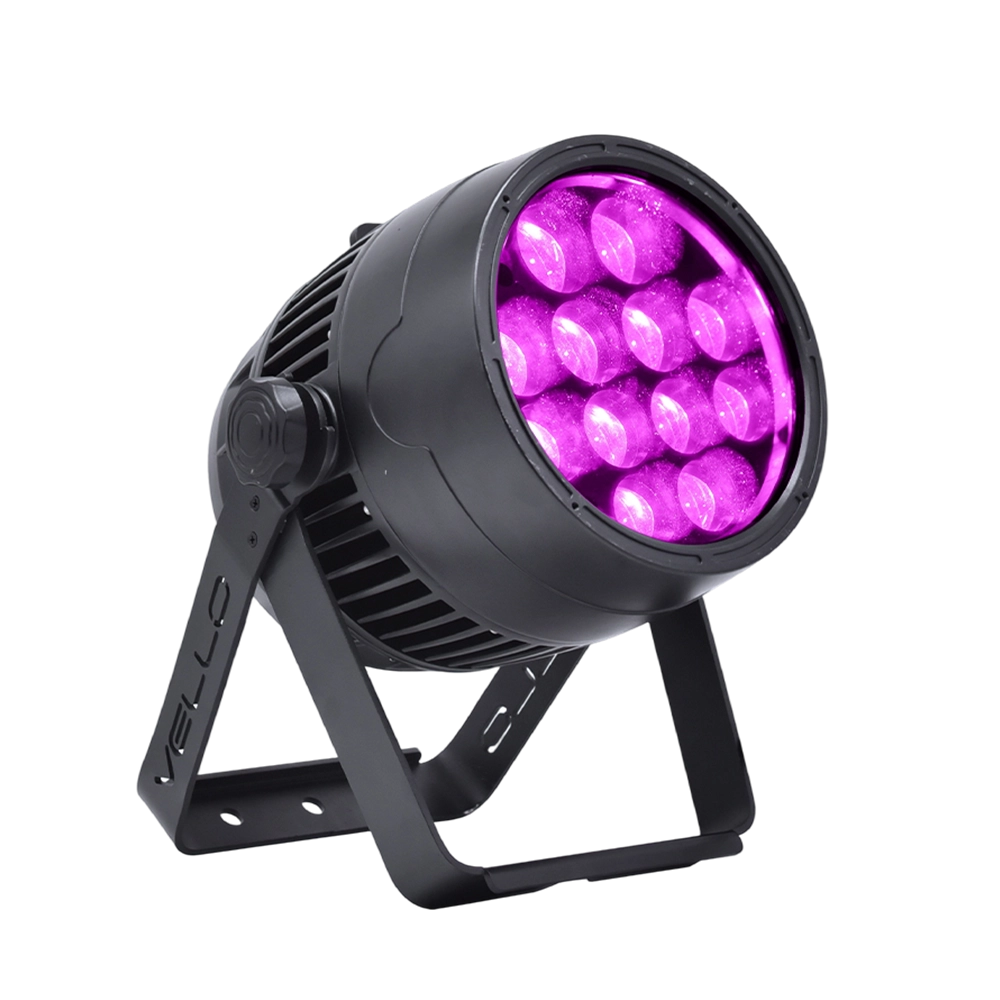
The Vello Zoom Par 40 IP is a powerful outdoor LED wash light equipped with 12x high-power 7-in-1 RGBACL LEDs. Designed for durability and rich color rendering, it features a wide motorized zoom (6°–50°), smooth dimming, and adjustable CTO presets (3200K–7500K), with 90+ CRI. With an IP66-rated die-cast aluminum body, it’s ideal for both indoor and outdoor applications, including stage lighting, architecture, live events, and installations.
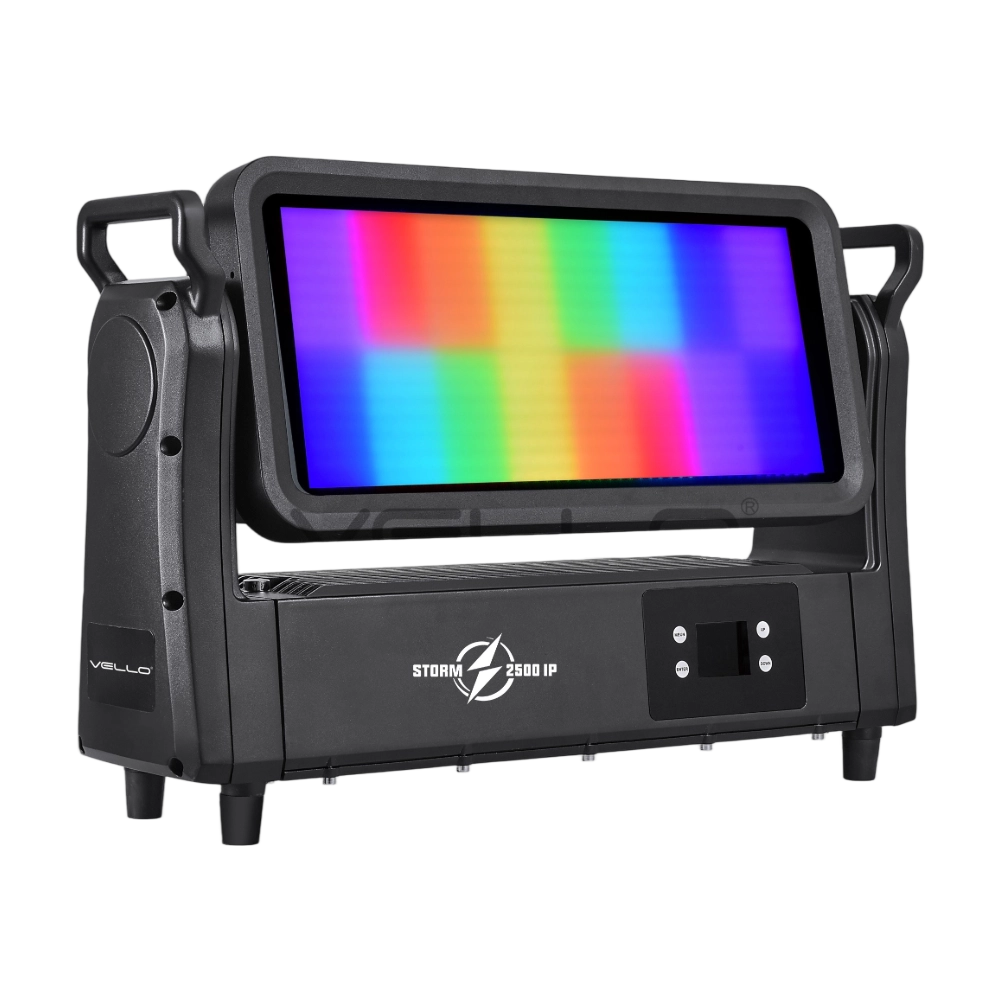
Storm 2500IP is a powerful 800W outdoor-rated LED strobe and wash fixture, equipped with 768 pieces of 5050 RGB LEDs and 144 pieces of 2W cool white LEDs for vibrant effects and precise pixel control. With IP65 protection, a wide 220° tilt, a strong RGBW strobe, DMX-controlled frost, an electronic frost function, and smart glass technology, it delivers both intense and soft lighting for any environment. Designed with silent, flicker-free performance and flexible DMX control, Storm 2500IP is built for large-scale shows, tours, and outdoor events.
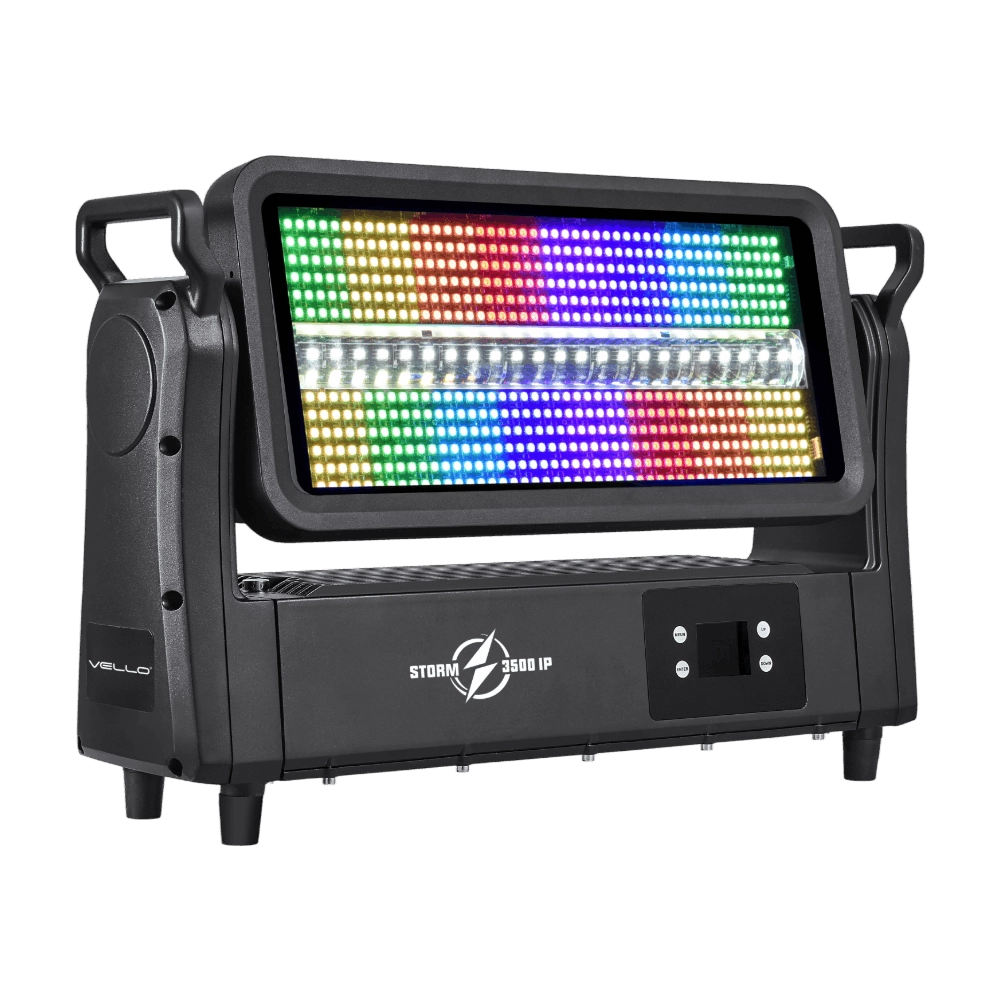
Storm 3500IP is a high-power 1200W outdoor-rated LED strobe and wash fixture, fitted with 576 pieces of 5050 RGB LEDs and 72 pieces of 12W cool white LEDs for brilliant, punchy effects with pixel-level control. Featuring IP65 protection, a wide 220° tilt, a strong RGBW strobe, DMX-controlled frost, and a 0–100% linear dimmer, it ensures versatile output from powerful to soft washes. With silent, flicker-free operation, multiple DMX channel modes, and robust die-cast aluminum housing, Storm 3500IP is built for demanding concerts, festivals, and large outdoor events.
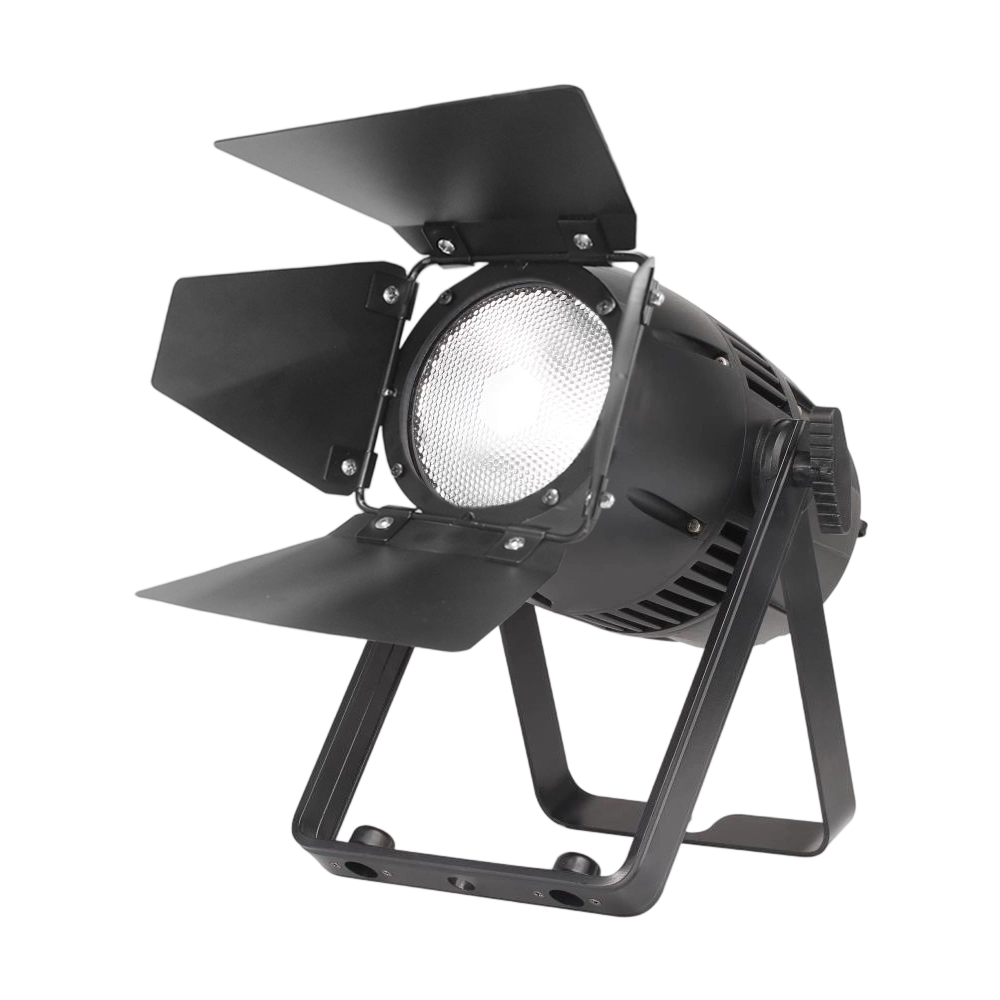
Solar Par 200 RGBW is a 200W IP65-rated outdoor LED par, powered by a high-power 200W 4-in-1 COB LED for vibrant RGBW color mixing and smooth output. With optional 30° or 50° lens angles, flicker-free dimming, and multiple DMX channel modes, it offers versatile performance for stages, architectural lighting, and outdoor events. Built with a robust die-cast aluminum housing and equipped with Seetronic IP65 DMX and PowerCON in/out, Solar Par 200 delivers reliable, weather-resistant operation in any environment.
◌ Let Us Support Your Project
Request a Custom Quote and Technical Support
Fill out the form below, and our sales team will contact you shortly with product details, pricing, and customer service options.
Rest assured that your privacy is important to us, and all information provided will be handled with the utmost confidentiality.
By clicking "Send your message," I agree to your processing my personal data.
To see how to withdraw your consent, how to control your personal data, and how we process it, please see our Privacy Policy and Terms of Use.
Over 20 Years of Innovation in Stage & Studio Lighting
© 2026 VELLO. All Rights Reserved. 粤ICP备20023734号
Join our socials
VELLO
Whatsapp: +8613902276704
Vello Lighting
VelloLights
Vellolight_professional