





Why choose RGBW vs RGB for professional stage lighting?
- 1) How do I calculate the exact lumens and lux I need for a 10–15 m wide stage with a 5 m trim height using LED wash and moving head fixtures?
- 2) Why choose RGBW vs RGB for professional stage lighting?
- 3) How do I specify flicker-free LED drivers and PWM frequency for mixed live and broadcast events?
- 4) I plan to deploy 50 pixel-mapped LED battens + 12 moving heads—how do I size DMX/Art-Net universes, network nodes and address mapping without performance headaches?
- 5) What optical specifications (beam angle, homogenizer, lens type) guarantee a uniform audience wash with minimal hot spots when using LED PARs and washes?
- 6) How do I calculate the total cost of ownership (TCO) for LED stage lights vs traditional discharge fixtures over 5 years (purchase, power, maintenance, spares)?
1) How do I calculate the exact lumens and lux I need for a 10–15 m wide stage with a 5 m trim height using LED wash and moving head fixtures?
Beginners often get vague lumen numbers from vendors. To size fixtures correctly you must work from target lux levels (illuminance) for the activity and then convert to fixture output (lumens) using beam optics, mounting distance and diversity losses.
Step-by-step method (practical):
- Choose target lux by application: small theatre/drama 300–500 lx on the performance area; corporate events 500–1000 lx; broadcast/close-up on-camera work 1500–2500 lx. These ranges follow common IES/industry practice for stage applications.
- Define coverage area: e.g., stage 12 m wide × 8 m deep = 96 m².
- Estimate fixture mounting distance and beam spread. For a 5 m trim height, a flood/wash fixture with a 40° beam roughly covers a circle diameter D = 2 × distance × tan(beam/2). At 5 m and 40°, D ≈ 5 × 1.19 ≈ 5.95 m diameter per fixture.
- Use the lumen-to-lux conversion: lux = lumens × (utilization factor × maintenance factor) / area. For multiple fixtures, sum luminance contributions or use average lux = total luminous flux on area / area.
- Account for utilization and maintenance factors: for indoor stage lighting use utilization factor ~0.6–0.8 (optics losses and non-ideal aiming) and maintenance factor 0.8–0.9 (LED depreciation, dirt). Conservative overall factor = 0.6–0.7.
Example: You want 500 lx on a 96 m² stage. Required total lumen_on_stage = lux × area = 500 × 96 = 48,000 lm. With utilization+maintenance combined = 0.65, you need total fixture lumen rating ≈ 48,000 / 0.65 ≈ 73,846 lm. If you pick LED washes rated at 7,500 lm each, you need ≈ 10 such fixtures evenly distributed and aimed for overlap. If you use stronger washes (15,000 lm) you'll need ~5–6 fixtures.
Practical tips:
- Use a lux meter to validate on-site after hanging. Software-based previsualizers (light plot + photometric data) will give more accurate counts.
- For broadcast shoots raise your planning numbers by 20–50% to allow camera gain and color-rendering adjustments.
- Mix moving-head spots (narrow, high lux) with wide-angle LED wash (soft, even field) to control hotspots and silhouette.
2) Why choose RGBW vs RGB for professional stage lighting?
This is one of the most common purchase questions. The short answer: RGBW provides better whites, more accurate pastel colors, higher perceived brightness for whites, and improved color rendering—important for cameras and skin tones—while RGB can be adequate for saturated theatrical looks and lower-cost installs.
Detailed considerations:
- Color mixing method: RGB mixes red+green+blue LEDs to create many colors. But producing neutral white requires precise balancing of RGB channels and often suffers from reduced luminous efficacy and color shift. RGBW includes a dedicated white LED (usually warm, cool, or tunable) to deliver pure whites and pastels without desaturating the color channels.
- CRI and color accuracy: RGBW fixtures typically achieve higher effective CRI (Color Rendering Index) and improved R9 (red saturation) for skin tones because of the dedicated white emitter. For critical broadcast and theater work aim for fixtures with CRI > 90 or a TLCI rating appropriate for camera work.
- Lumen efficiency and perceived brightness: white LEDs are more efficient at producing white light than mixing three colored LEDs. An RGBW fixture will often deliver higher lux for white scenes at equal power than an RGB-only fixture.
- Pastels and gel matching: designers want soft pastels and gel-matched white balances (e.g., 3200 K for tungsten or 5600 K daylight). RGBW gives cleaner pastels and more stable correlated color temperature (CCT) presets.
- Complex pixel effects: For pixel-mapped battens and video-style effects, RGB-only arrays can still shine for saturated pixel art because the extra white LED can complicate color fidelity for pure saturated colors. Choose the mode that fits your creative needs (many fixtures offer RGB, RGBW, and tunable white modes).
- Cost and power: RGBW fixtures are typically costlier per channel and slightly larger, but often save energy if you frequently run white or pastel scenes versus using high-power RGB mixing to approximate white.
Recommendation: If your programming includes frequent white-balanced scenes, broadcast, fashion, or close-up talent, choose RGBW (or full-spectrum tuneable white + color mixing fixtures). If your portfolio is mostly saturated color washes and you need the lowest cost per pixel, RGB-only can work.
3) How do I specify flicker-free LED drivers and PWM frequency for mixed live and broadcast events?
Flicker is a top pain point—audience doesn't notice, but cameras do. The cause: PWM dimming at frequencies lower than camera frame/scan rates interacts with shutter speeds and rolling shutters to produce flicker or banding.
What to look for:
- Manufacturer claims: choose fixtures explicitly labeled flicker-free or camera safe and look for documented test results at common frame rates (24/25/30/50/60/120 fps). Many professional fixtures publish camera test graphs or offer firmware modes for broadcast.
- PWM frequency: for general use, aim for PWM > 1.5–2 kHz to avoid visible flicker on standard cameras. For high-frame-rate or high-shutter-speed cinematography, manufacturers should provide flicker performance up to the required fps—some pro drivers operate at >4–10 kHz or use constant-current analog dimming methods to minimize modulation.
- Driver topology: look for linear or hybrid constant-current drivers with high-frequency PWM or, better, DC or high-resolution current control. Some high-end fixtures use multi-level modulation or current-corrected dimming curves to reduce temporal artifacts.
- Practical testing: before buying, request footage showing the fixture at your intended camera frame rates and shutter angles. On-site test method: film fixtures at the maximum camera frame rate and shutter speed you expect and scan for banding. A smartphone slow-motion camera (120–240 fps) is a quick diagnostic but not definitive for broadcast-level cameras.
Summary: Require fixtures marketed as camera/flicker-free with published PWM ratings or camera test files. For mixed live and broadcast use, insist on vendor documentation or on-site camera tests before purchase.
4) I plan to deploy 50 pixel-mapped LED battens + 12 moving heads—how do I size DMX/Art-Net universes, network nodes and address mapping without performance headaches?
A real-world control architecture avoids running out of channels and prevents latency. DMX512 is limited to 512 channels per universe, so you must map your channel footprint per fixture and use Art-Net/sACN over Ethernet for large systems.
Steps and example:
- Determine channel mode per fixture. Pixel-mapped LED batten might use 18–24 channels per segment or 3 channels per pixel; a moving head can use 16–40 channels depending on mode (basic vs full-featured).
- Calculate total channels. Example: 50 battens × 24 channels = 1,200 channels. 12 moving heads × 32 channels = 384 channels. Total ≈ 1,584 channels → ~4 DMX universes (1,536 per 3 universes is short; so 4 universes required because 4 × 512 = 2048 channels available).
- Use Art-Net or sACN over gigabit Ethernet with a managed switch. Distribute universes across nodes: e.g., 2× sACN/Art-Net to DMX nodes near the stage racks; each node outputs 4–8 physical DMX outputs (each a universe). Keep cable runs short for DMX cable segments and use fiber or stage boxes for long runs.
- Minimize latency: use dedicated lighting networks (VLAN), avoid excessive multicast traffic, and choose network switches rated for real-time audiovisual workloads. Use unicast sACN where appropriate to reduce traffic.
- Addressing & management: enable RDM (Remote Device Management) for remote addressing and diagnostics. Keep a channel spreadsheet and label nodes/ports physically and logically in the lighting desk.
Practical advice: Always budget an extra 10–20% of channel capacity and at least one spare universe for expansion or unexpected fixtures. For heavy pixel-mapped installations consider a pixel-specific protocol (e.g., eDMX/Art-Net pixel mapping utilities) and fixtures that support per-pixel mapping with low channel counts.
5) What optical specifications (beam angle, homogenizer, lens type) guarantee a uniform audience wash with minimal hot spots when using LED PARs and washes?
Optics determine perceived quality more than raw lumens. Hotspots and non-uniform washes come from poor mixing optics, inadequate lens count, or narrow emitter arrays used with wide secondary lenses.
Key optical specs and what they mean:
- Beam angle vs field angle: Beam angle defines the bright central cone; field angle includes the broader usable lit area. For smooth washes choose fixtures with a larger field angle and soft falloff.
- Number and quality of lenses: Multiple-lens arrays with a mixing chamber (optical homogenizer) produce smoother output than single large lenses sitting over discrete LEDs. Look for descriptions like integrated mixing chamber or engineered homogenizer.
- Zoom type: Continuous zoom with good diffusion gives a consistent edge across the zoom range. Step-zoom or fixed lenses may show edge artifacts at intermediate angles.
- Diffusion and beam shapers: Built-in diffusion sandwiches, removable honeycombs, or softening filters reduce hot spots. For audience-facing front wash fixtures, select models with micro-lens arrays and diffusers designed for even field distribution.
- Beam angle recommendations: For front-of-house washes: 30°–60° depending on throw and coverage; for general obliteration of shadows on performers choose 40°–80° for wide wash; for beams/gobos choose 2°–20° for tight beams and aerial effects.
Testing during selection: ask for photometric files (IES/IESNA) and run them in your lighting previsualization software. On-site, use a lux meter grid to check evenness: aim for an average-to-minimum ratio (uniformity) of no more than 1.5:1 for critical front lighting; 2:1 is acceptable for less-critical washes.
6) How do I calculate the total cost of ownership (TCO) for LED stage lights vs traditional discharge fixtures over 5 years (purchase, power, maintenance, spares)?
Buyers often focus only on upfront cost. A 5-year TCO model gives you clear ROI when comparing LEDs to legacy lamps (HMIs, discharge fixtures).
Formula (summarized): TCO = Purchase price + (Energy cost) + (Maintenance & parts) + (Operational labor) + (Depreciation/upgrade allowance).
Example conservative calculation (per fixture basis):
- Assumptions: LED fixture consumes 400 W average during show; equivalent discharge fixture consumes 1,200 W (lamp + ballast). Show schedule: 250 hours/year (installation, rehearsals, gigs). Electricity cost: $0.15/kWh.
- Energy cost over 5 years: LED = 0.4 kW × 250 h × 5 × $0.15 = $75; Discharge = 1.2 kW × 250 × 5 × $0.15 = $225. LED saves $150 in electricity per fixture in this scenario.
- Maintenance & parts: LED drivers are long-life; expect minimal lamp replacement (LEDs degrade slowly). Discharge fixtures need lamp replacements every 500–2,000 hours (cost $100–$400 per lamp) plus cleaning and ballast issues. Using conservative lamp replacement of 1 lamp/year at $200, over 5 years = $1,000 for discharge vs ~$100–$200 for LED spare parts and driver warranty service.
- Operational labor & downtime: lamp changes, focusing, and warm-up/cool-down increase labor costs for discharge fixtures.
- Purchase price: LEDs are higher initially (e.g., $1,200 for a mid-range LED wash) vs $600–$900 for a comparable discharge fixture in older markets. The energy + maintenance savings typically offset higher upfront cost over 2–4 years for many rental and venue scenarios.
Conclusion: calculate your specific show hours and local electricity costs. For venues and rental houses with moderate to high utilization, LEDs almost always show a positive ROI within 2–5 years when factoring lamp replacements, reduced rigging weight, and lower cooling costs.
Concluding summary — Advantages of RGBW and modern professional stage lighting equipment
Modern professional stage lighting equipment built with quality optics, DMX/Art-Net control, flicker-free drivers, and RGBW color engines provides better color fidelity, cleaner whites, higher usable lux, and simplified control workflows. RGBW is the pragmatic choice for mixed live/broadcast work because it reliably produces accurate whites, improved CRI, and greater perceived brightness for white and pastel scenes while preserving saturated RGB capability for creative looks. When buying LED stage lights prioritize photometric data (lumens and IES files), PWM/flicker documentation for camera work, CRI/TLCI numbers for color accuracy, DMX/Art-Net compatibility, and optical design (mixing chamber, beam angle). Properly specified, LED systems reduce TCO, simplify rigging, and expand creative possibilities compared to older discharge systems.
For a tailored fixture list and a no-obligation quote, contact us at www.vellolight.com or email info@vellolight.com.
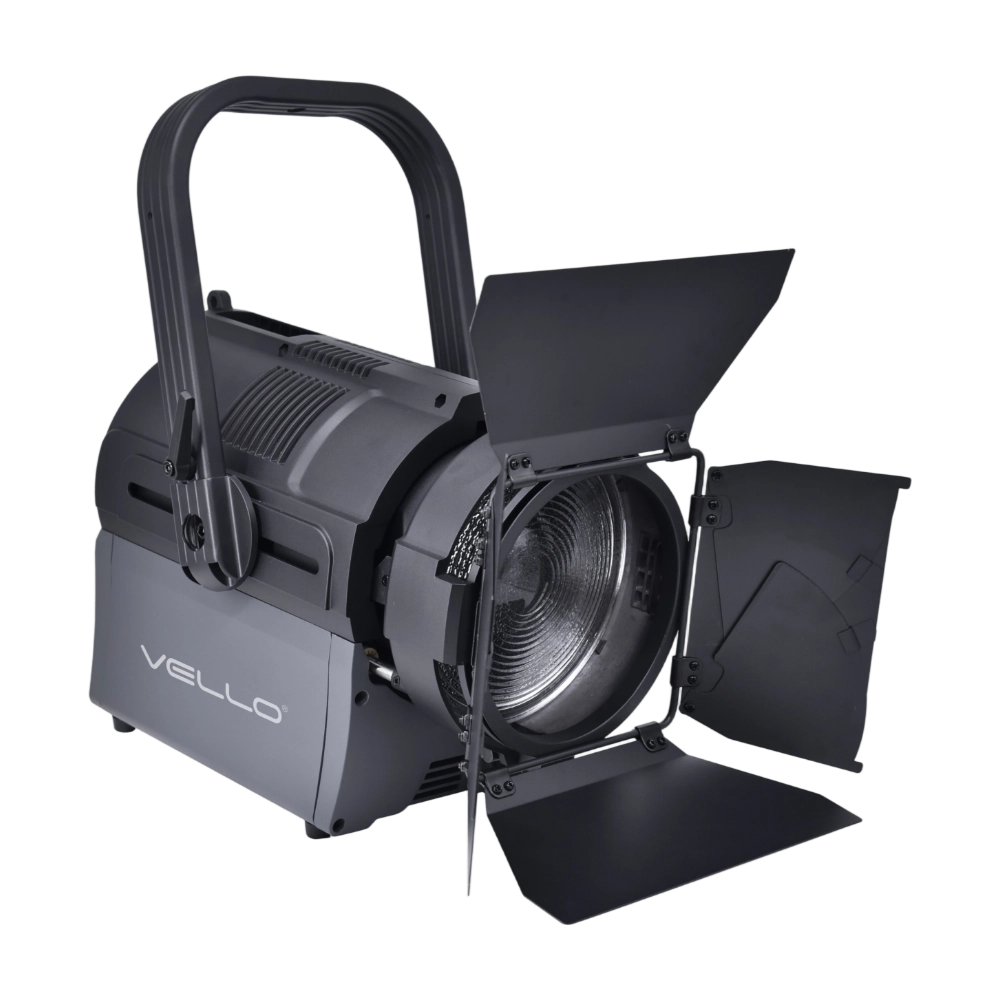
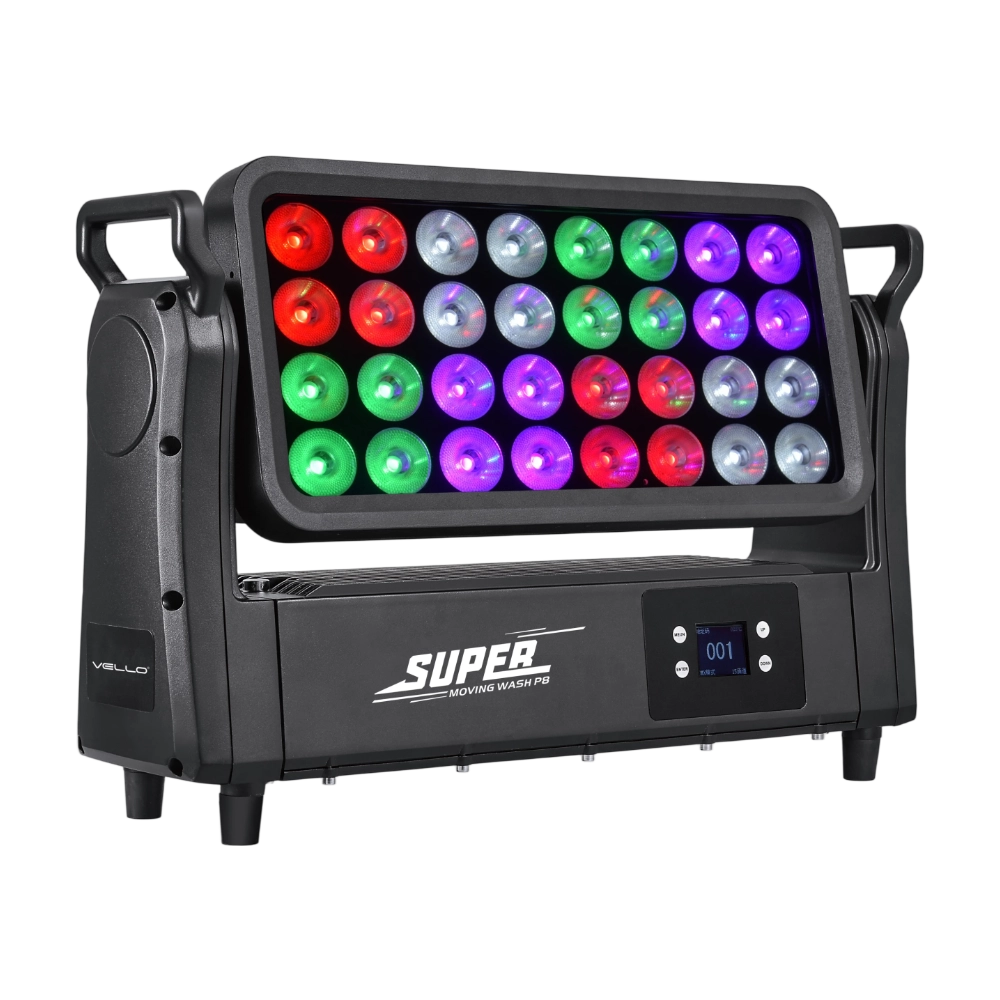
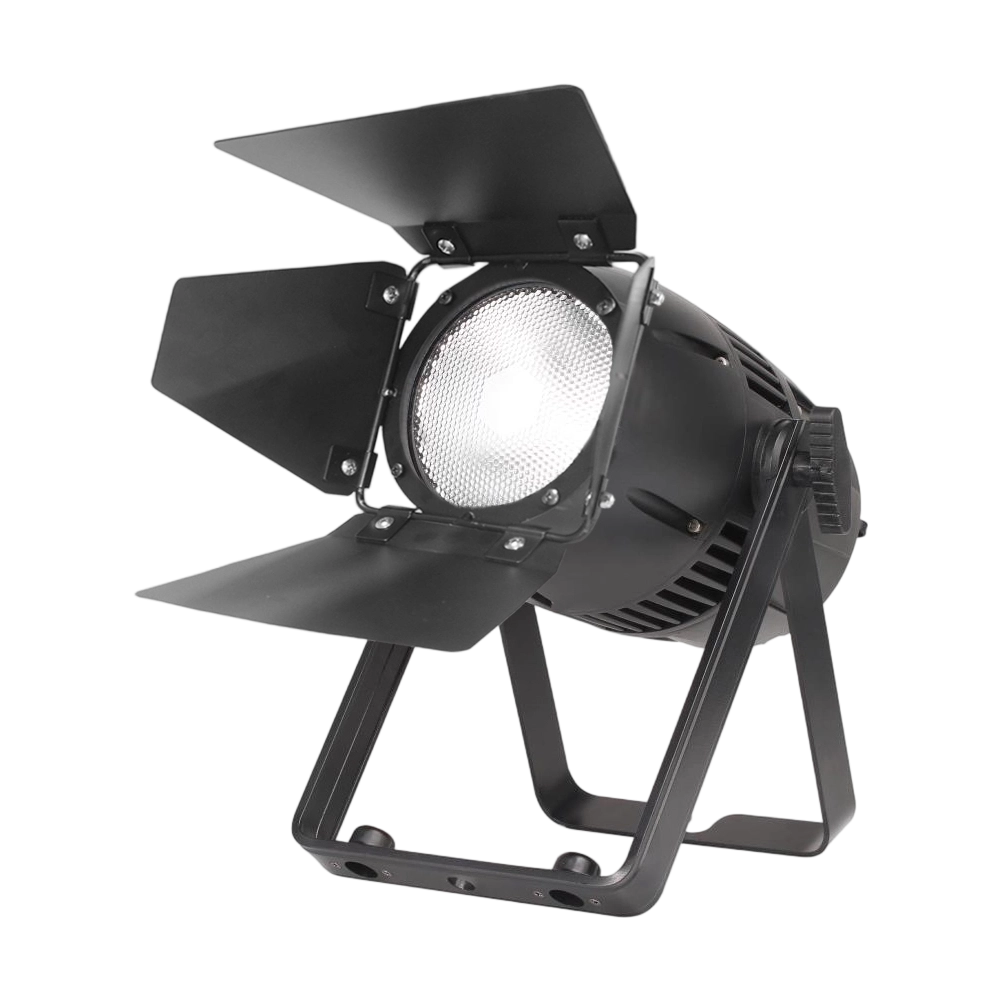
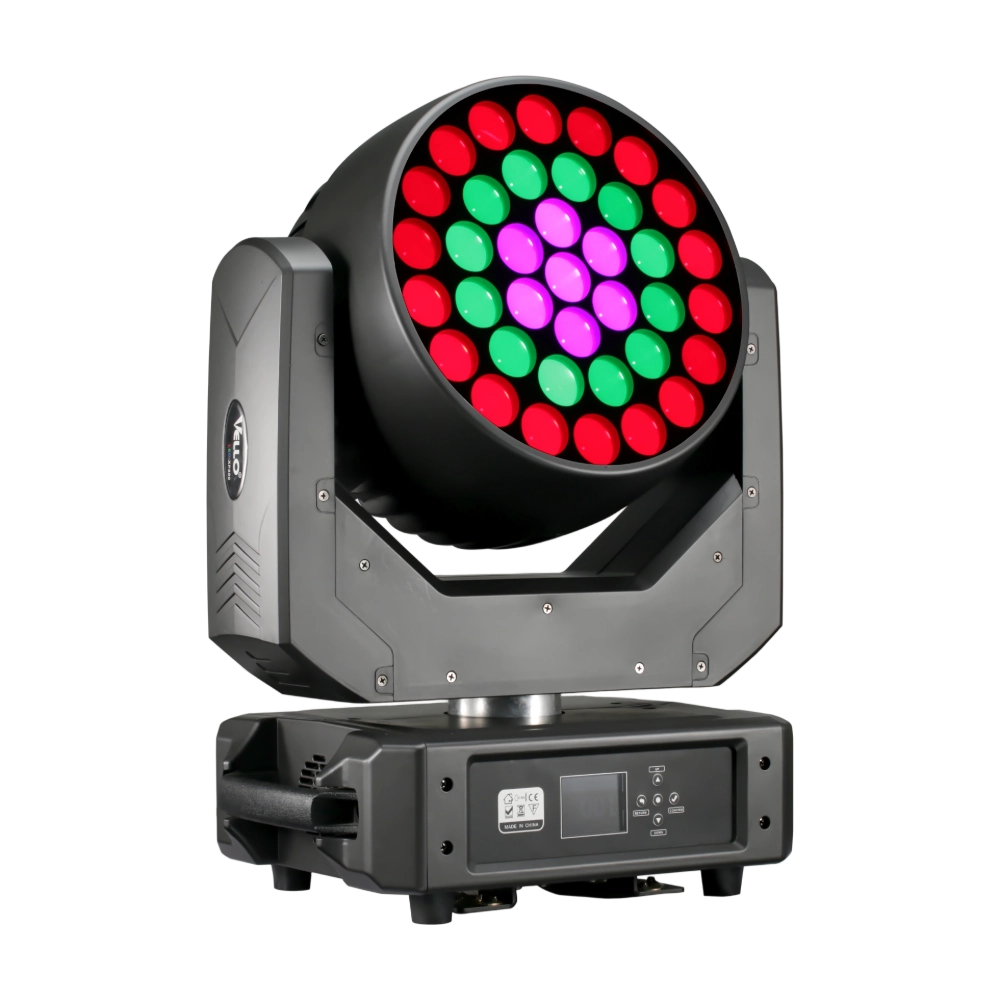
Major categories
Do you ship internationally?
Yes. We offer sea, air, and express delivery to many countries and regions worldwide.
What is the warranty period for your products?
Most products come with a standard 1–2 year warranty. Please refer to product details or contract terms for specifics.
What is the usual lead time?
Standard models are typically shipped within 7–15 working days after payment. Customized items may vary.
Do your products support customization?
Yes. We offer OEM and ODM services tailored to project needs, including design, optics, and control compatibility.
Do you offer samples?
Samples are available for certain models. Please confirm with our sales team for details.
You may also like
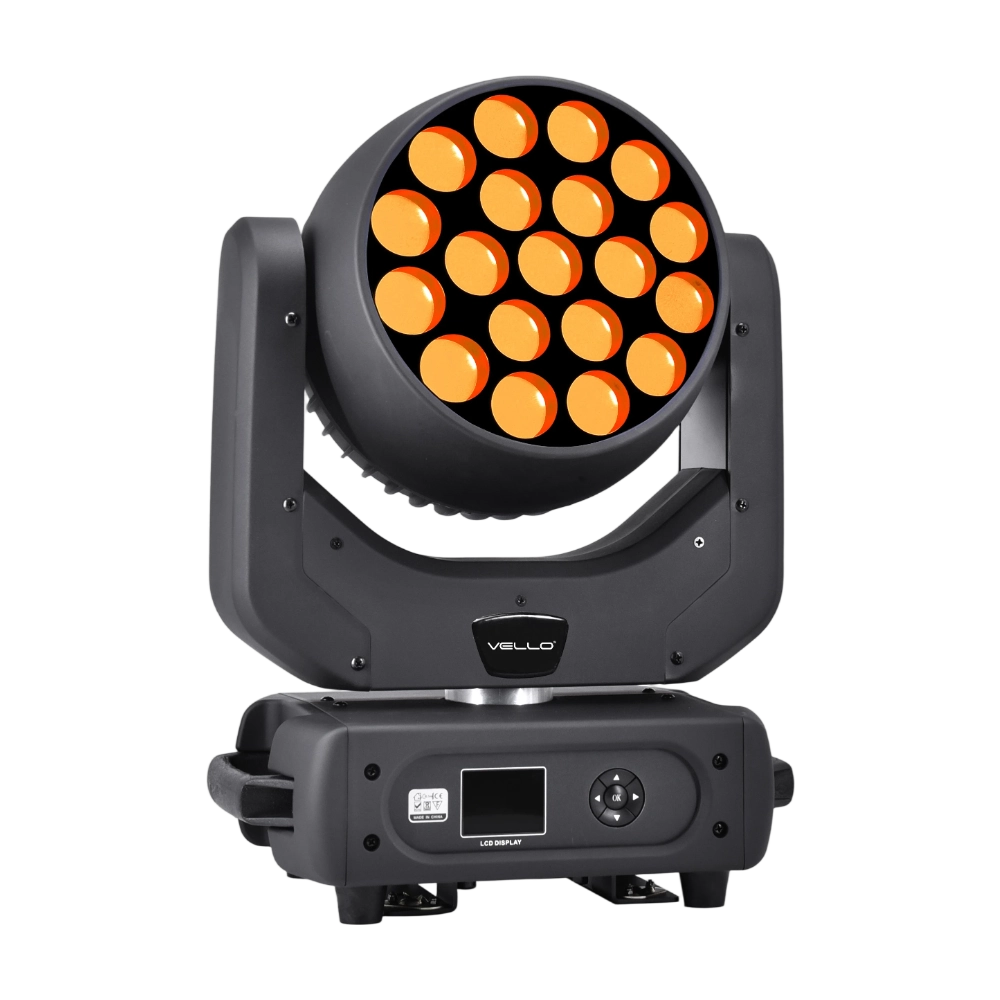
Top Wash P8 is a 1200W high-power IP65 LED wash light, equipped with 32 × 40W RGBW 4-in-1 LEDs for vibrant color mixing and powerful output. With 8 pixel sections (4 LEDs per group), selectable lens angles of 6° / 25° / 45°, and optional extra filters, it offers flexibility for both narrow beams and wide washes. The fixture supports strong RGBW strobe effects, smooth 0–100% linear dimming, and precise pixel control. Featuring a 220° tilt range, silent flicker-free performance, and multiple DMX modes, Top Wash P8 is built for large-scale concerts, outdoor events, and architectural lighting where high brightness and reliability are essential.
The BSW450 is a high-performance moving head fixture equipped with an original Osram 420W bulb, delivering exceptional brightness, precision, and versatility. Designed for professional stage applications, it seamlessly combines beam, spot, and wash functions in one compact unit, making it a powerful all-in-one lighting solution.
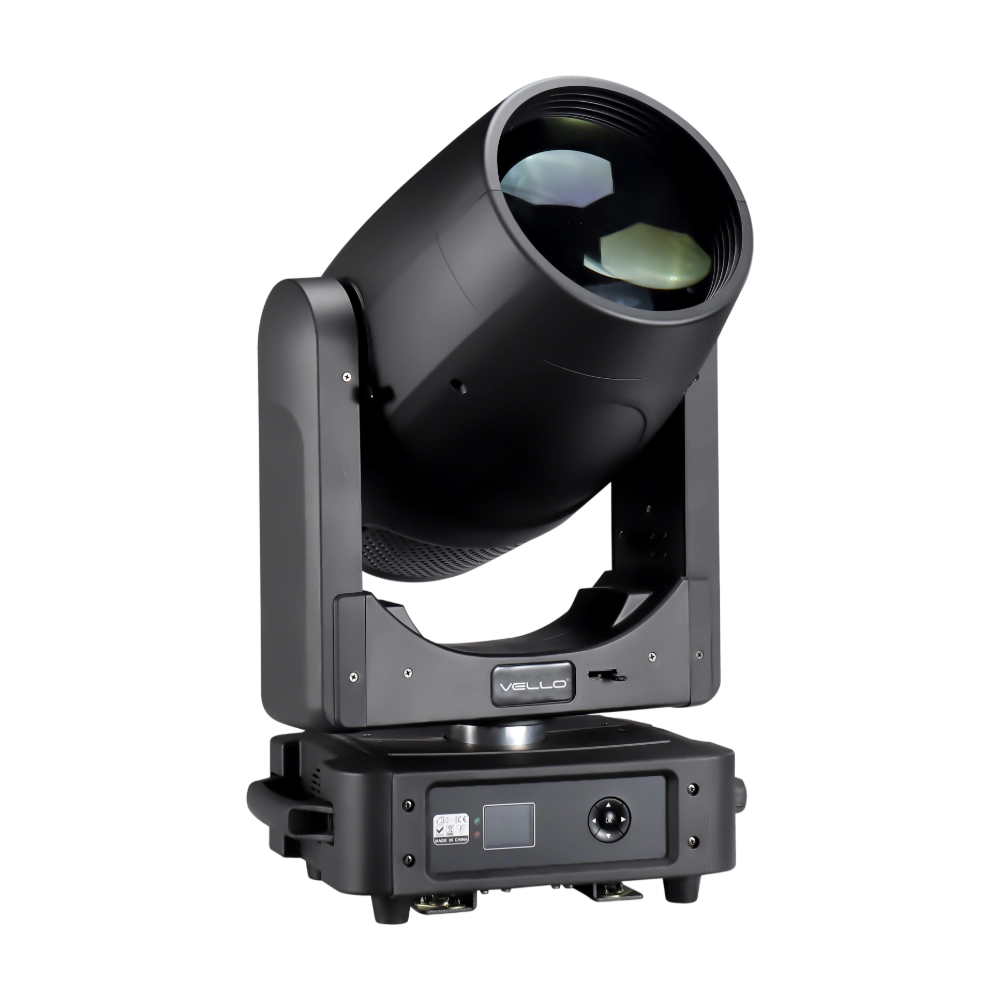
The BSW450 is a high-performance moving head fixture equipped with an original Osram 420W bulb, delivering exceptional brightness, precision, and versatility. Designed for professional stage applications, it seamlessly combines beam, spot, and wash functions in one compact unit, making it a powerful all-in-one lighting solution.
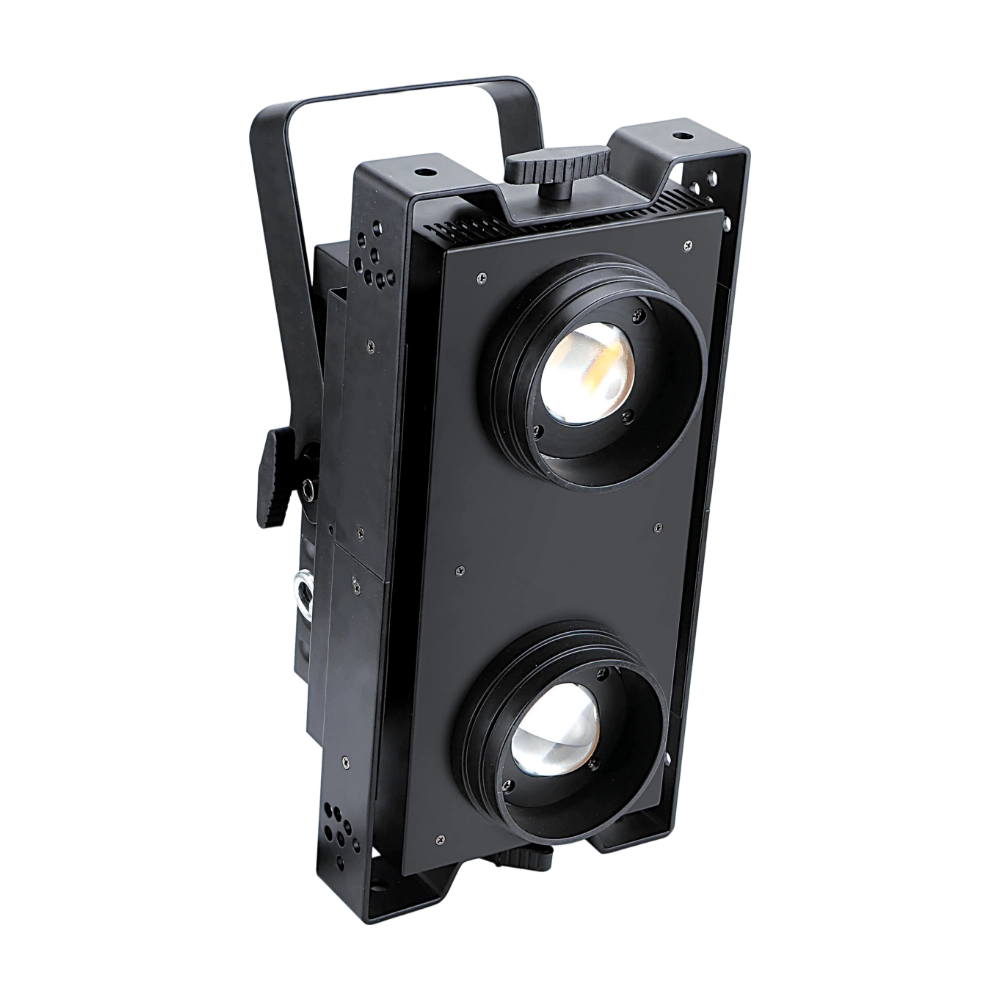
LED Blinder 300CTO is a 300W high-output stage blinder, powered by 2 × 150W LEDs with adjustable CTO (3200K–6000K) and super high CRI ≥97 for natural, camera-ready light. Featuring IP20/IP44 protection options, ±20° adjustable head tilt, and both horizontal and vertical mounting, it offers flexible setup for concerts and stage productions. With smooth 0–100% dimming, variable strobe, 16-bit dimmer curves, and independent or joint control of each head, the LED Blinder 300CTO delivers a powerful punch, versatile effects, and reliable flicker-free performance for professional lighting applications.
◌ Let Us Support Your Project
Request a Custom Quote and Technical Support
Fill out the form below, and our sales team will contact you shortly with product details, pricing, and customer service options.
Rest assured that your privacy is important to us, and all information provided will be handled with the utmost confidentiality.
By clicking "Send your message," I agree to your processing my personal data.
To see how to withdraw your consent, how to control your personal data, and how we process it, please see our Privacy Policy and Terms of Use.
Over 20 Years of Innovation in Stage & Studio Lighting
© 2026 VELLO. All Rights Reserved. 粤ICP备20023734号
Join our socials
VELLO
Whatsapp: +8613902276704
Vello Lighting
VelloLights